

If you have been told that a tooth needs a root canal, there is no need for alarm. Today, a root canal procedure is as routine and comfortable as getting a dental filling. In fact, a root canal is usually the best way to relieve toothache pain, save a damaged tooth, and keep your natural smile.
At Iconic Dental Arts, we use the latest technology to give precise, gentle care that helps patients keep healthy, beautiful smiles. Your care and comfort are our top priorities. From our office on N May Ave in Oklahoma City, our team takes the time to explain what is happening with your tooth, answer your questions, and help you feel at ease from your first visit to your final restoration. You can rest assured your oral health is in good hands.
Root canal procedures have a demonstrated success rate of well over 90%. They remain the most effective way to save and keep a tooth that has been badly compromised by decay or injury.
A healthy set of natural teeth supports your oral health and your overall well-being. That is why root canal therapy, rather than pulling the affected tooth, is a routine and widely recommended treatment. Across the United States alone, dentists perform root canal procedures almost 41,000 times a day and close to 15 million times a year.
Keeping your own tooth also means keeping your natural bite, the way your teeth meet when you chew, and the bone and gum support around that tooth. When a tooth can be saved, it is often the simplest path back to comfortable, confident chewing.

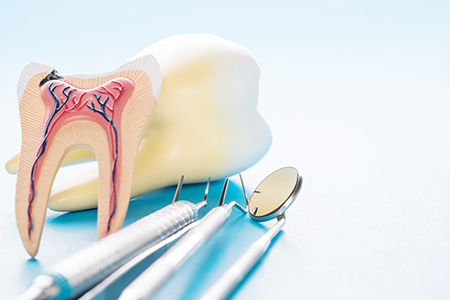
Your teeth are much more than hard biting surfaces and roots. Inside each tooth is a central chamber that holds connective tissue, nerves, and blood vessels. Together, these inner tissues are called the dental pulp. The pulp helps your tooth grow and mature before it comes into the mouth. Once the tooth is in place, the pulp nourishes it, keeps it vital, and alerts you to problems.
Sensitivity when you bite down, or when you eat or drink something hot or cold, is a warning from the nerves inside your tooth. It can mean decay is present, the tooth has been injured, or an infection is brewing. How much pain you feel depends on how much damage there is and how deeply the nerve is involved.
A tooth needs a root canal when its dental pulp has been damaged beyond repair or has died. The good news is that if enough healthy tooth structure remains and there is good bone support around the tooth, you do not need to have it pulled. A fully developed tooth does not need its pulp to keep working. Your dentist can perform a root canal to preserve your natural tooth.
Not every toothache means you need root canal therapy. Still, these warning signs suggest you might:
Pain is your body's way of telling you something is wrong. Mouth pain has many possible causes, but one of the most common is a toothache from decay or damage that has reached the tooth's inner tissues. Patients who need root canal therapy often describe tooth pain that wakes them up at night.
If a sip of coffee or a bite of ice cream makes you wince, it is time to contact our office. Extreme sensitivity to hot or cold foods and drinks can point to a dental pulp that is inflamed, irritated, or no longer alive.
If it hurts to bite and chew, or even to touch the tooth, the pulp may be involved. This can be a sign of permanent damage to the tooth's inner tissues or of an infection.
A tooth that turns darker is often signaling that its inner tissues, including the nerve and blood supply, have been compromised. Teeth that have been injured may slowly darken as these inner tissues lose their vitality.
An injury that chips or breaks a tooth can also traumatize the dental pulp. In some cases, so much tooth structure is lost that a root canal is needed to save the tooth.
Swollen gums around a tooth can mean an infection has developed. The swelling may get worse and lead to more serious problems. Sometimes a dental abscess begins to ooze pus and drain. Either way, you need prompt care. If you have swelling or severe pain, our emergency dental care can help, or you can learn more on our emergency treatment page.
The problems that lead to a root canal can damage the bone that supports the tooth, making it feel loose. Root canal therapy can often resolve this as the tissues heal.

Some of the signs above can also point to other dental problems, but every one of them deserves a prompt evaluation. In some cases, a tooth that needs a root canal has no obvious symptoms at all. It may first be found during a comprehensive, routine exam. These teeth usually show signs on X-rays of periapical pathology (problems at the tip of the root) or other structural damage. This is one more reason regular checkups matter, and our digital radiography helps us see what is happening below the surface.
When a root canal is recommended, it is important to get treatment on time. Waiting raises the risk of more widespread and severe symptoms. A dental infection can seriously affect your oral health and may even threaten your overall health and well-being. Acting early often means a simpler visit and a better chance of saving the tooth.
Thanks to modern dental instruments and advanced techniques, a non-surgical root canal is often as comfortable as a routine dental filling. Many patients are surprised by how calm and straightforward the visit feels.
Some root canals are finished in one visit, while others take 2 or 3 appointments. The timeline depends on things like how many canals the tooth has, the shape of its roots, and whether there is an active infection. We will let you know what to expect for your tooth before we begin.
Here is what happens during treatment:
If dental visits make you nervous, you are not alone. Along with local anesthesia, we offer options in dental sedation to ease anxiety during your procedure. Ask our team which option may be right for you.
At Iconic Dental Arts, our patients' care and comfort come first. Our goal is to help you enjoy excellent oral health and to keep you well informed every step of the way. You can also review our post-op instructions any time you have a question at home.
After your root canal procedure, here is what you may experience and how to care for your tooth:
Right after your visit, you may feel some lingering numbness. Normal feeling usually returns within an hour or two. Until the anesthetic has fully worn off, take care not to accidentally bite or injure your lips, cheeks, gums, or tongue. Be careful with chewing, drinking hot beverages, or smoking.
A root canal relieves the pain of a toothache. Still, once the anesthesia wears off, you may feel mild to moderate discomfort for a short time. This should ease within a few days. To keep extra pressure off the tooth, which can cause pain, we may gently file the biting surface so it sits slightly out of contact with the opposing teeth. Our office will also recommend the right over-the-counter pain relievers and provide a prescription if needed.
If you were given antibiotics to treat or prevent an infection, finish the full course exactly as prescribed, even if you start to feel better.
Even with a temporary filling, a tooth with a root canal is still vulnerable to stress and can break until a permanent crown or other suitable permanent restoration is placed. In the meantime, protect the tooth. Try to chew on the other side of your mouth and avoid hard and sticky foods.
While you should be gentle with the treated tooth, it is important to keep brushing and flossing. Good oral hygiene helps prevent new problems and supports healing and long-term oral health.
To rebuild the strength of a tooth after root canal therapy, it needs a permanent crown or another suitable restoration. Until then, the remaining tooth structure is weak and can fracture. The sooner your permanent restoration is in place, the sooner you can bite and chew with confidence and ease. Learn more about our same-day crowns.
With proper care and maintenance, a tooth treated with a root canal can last a lifetime. Regular dental cleanings and exams help us keep an eye on your treated tooth and the rest of your smile.
At Iconic Dental Arts, we are dedicated to providing the highest quality of care. If you have a toothache, sensitivity, or swelling, do not wait for it to get worse. And if you have any concerns after your procedure, such as ongoing discomfort or signs of infection, contact our office for prompt attention and care.
New to our practice? Visit our new patients page to see what to expect, explore financing options, or contact us to schedule a visit at our Oklahoma City office.
A root canal is a treatment that removes damaged or infected tissue from inside a tooth, then cleans, fills, and seals the space. The goal is to keep your natural tooth rather than pull it.
Once the tooth is fully developed, it can keep working without that inner tissue, so it can stay in your mouth for years with proper care.
Most patients find the visit comparable to getting a filling. The area is numbed with local anesthesia before we begin, so you should not feel pain during the procedure.
Afterward, mild to moderate soreness for a few days is common. Your team can recommend pain relievers that fit your situation.
Only an exam and X-rays can say for sure. Signs that often point toward a root canal include:
If you notice any of these, call Iconic Dental Arts promptly.
When enough healthy tooth structure and bone support remain, saving the tooth is usually preferred. Keeping it preserves your natural bite and the bone and gum support around it.
Extraction can lead to gaps that may need replacing later, so a root canal is often the simpler path.
Some root canals are finished in one visit, while others need two or three appointments. The timing depends on how many canals the tooth has, the shape of its roots, and whether an infection is present.
Our team will explain what to expect for your tooth before treatment begins.
Yes. Many people feel anxious, and you are not alone. Along with local anesthesia, sedation options are available to help you relax during treatment.
Let our team know about your concerns, and we can talk through which approach may suit you best.
Wait until the numbness fades, usually within an hour or two, so you do not bite your lips, cheeks, or tongue. After that, you can eat, but chew on the other side and avoid hard or sticky foods until the tooth is permanently restored.
A treated tooth can be weaker and may fracture, even with a temporary filling. A permanent crown or other suitable restoration rebuilds its strength and protects it.
Getting it placed promptly helps you bite and chew with confidence.
With proper care, a tooth treated with a root canal can last a lifetime. Brushing, flossing, and keeping up with regular cleanings and exams all help.
Visits also let us monitor the treated tooth and the rest of your smile.
Waiting raises the risk of stronger symptoms and a spreading infection, which can affect your oral health and even your overall health. Treating the tooth early often means a simpler visit and a better chance of saving it.
If you have swelling or severe pain, seek care right away.

Family, cosmetic and implant dentistry in Oklahoma City, building iconic smiles that last a lifetime.
8200 N May Ave
Oklahoma City, OK 73120